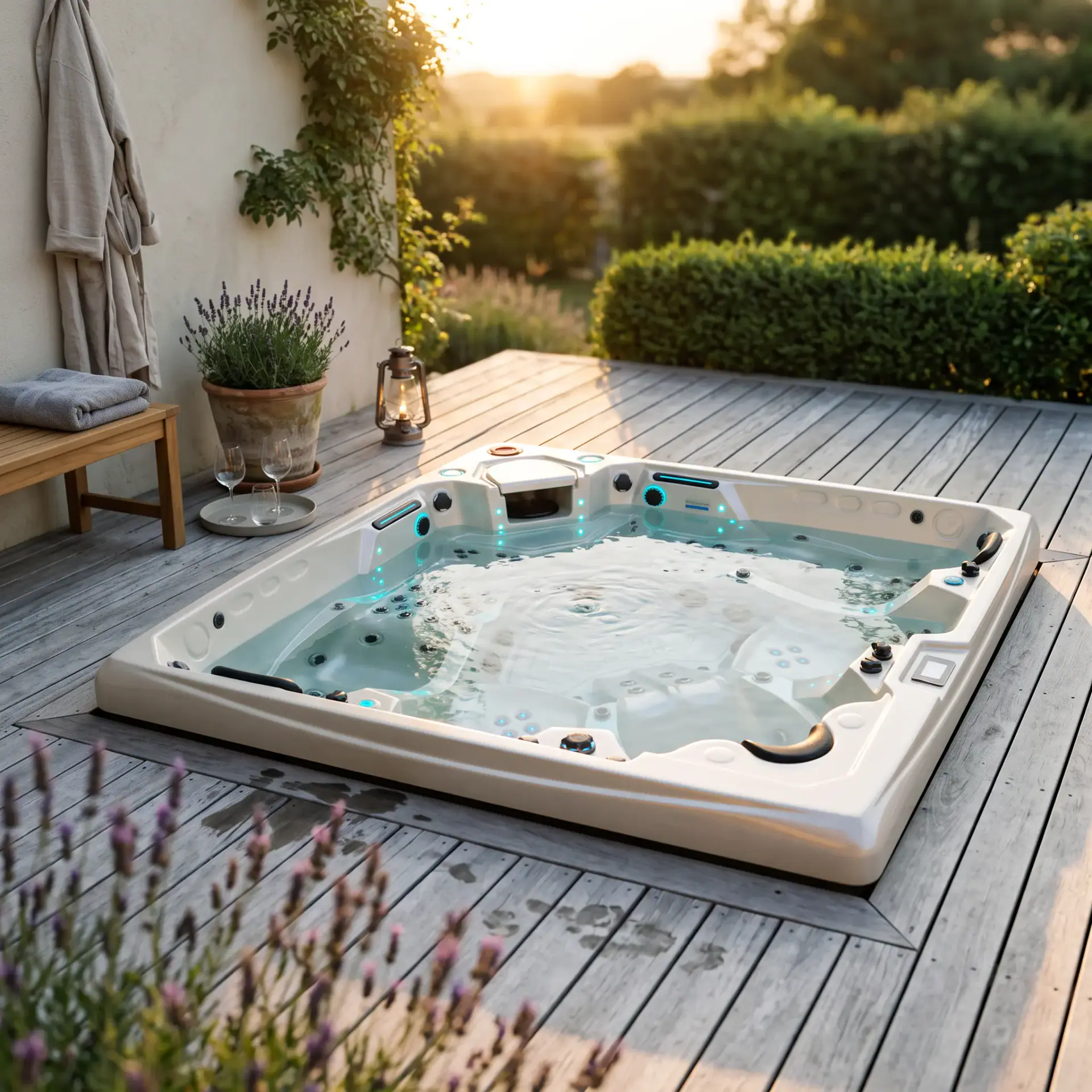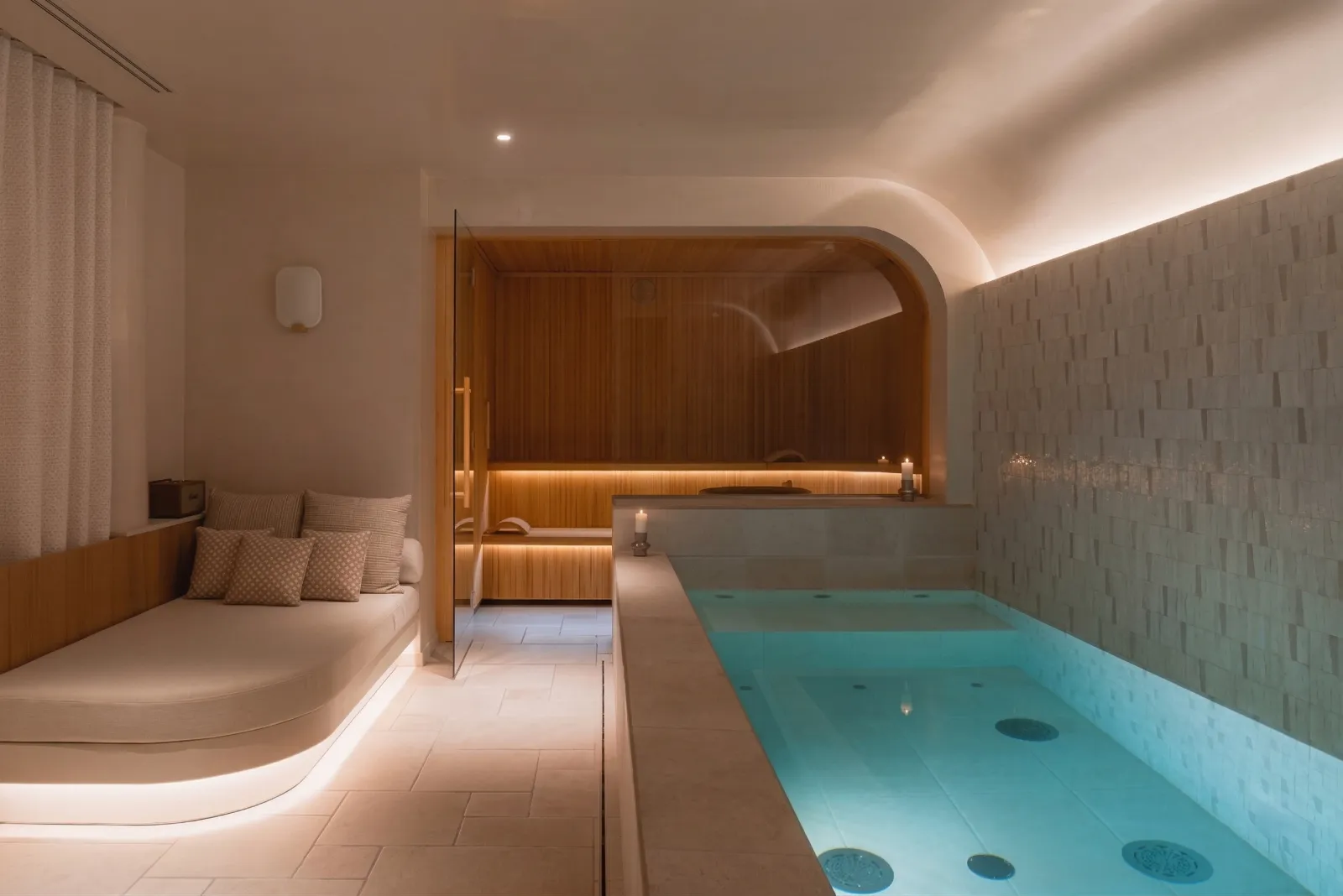
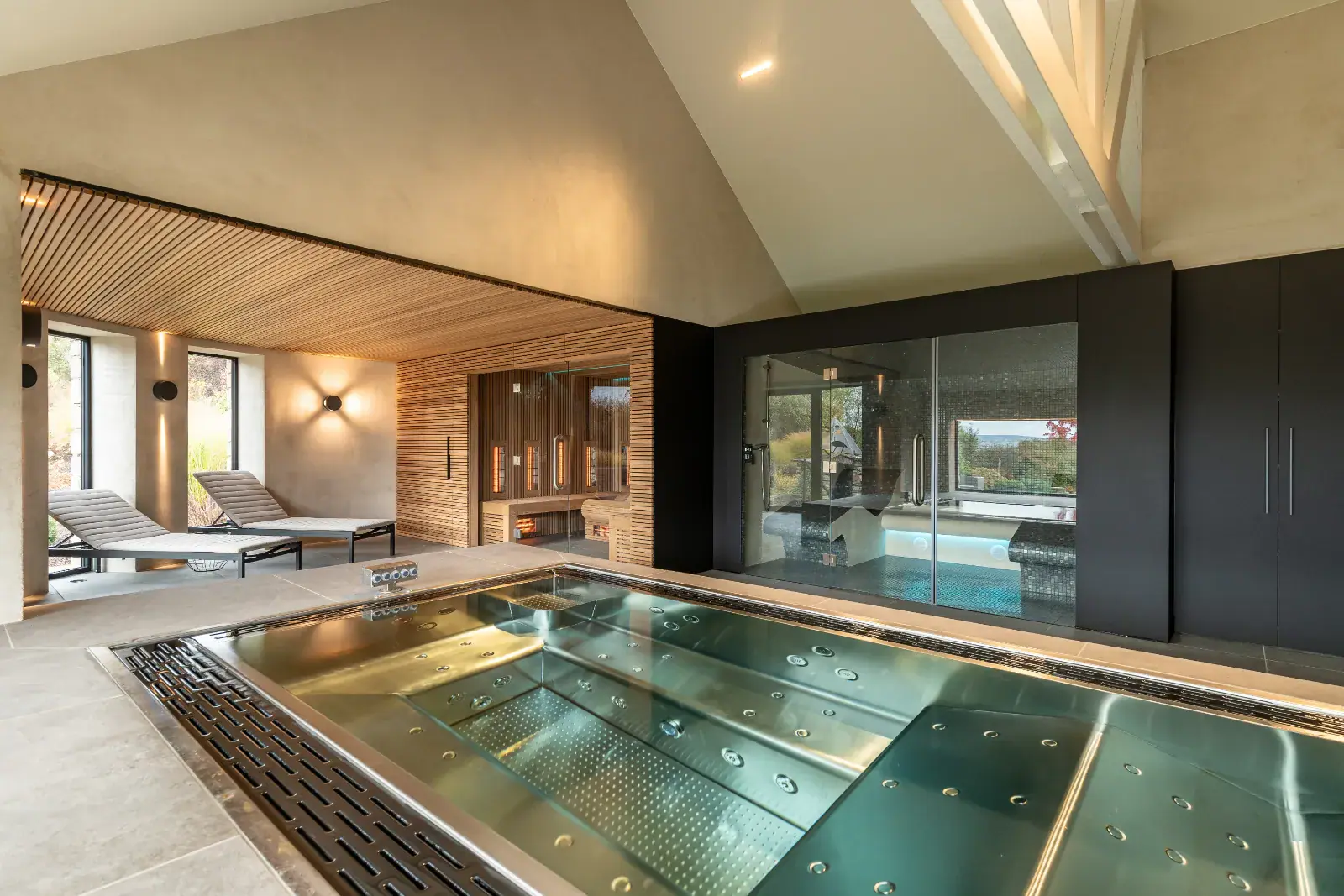
Most wellness equipment does not suddenly break down: it deteriorates slowly without a clear protocol. Here is what a team should do every day, every month and every year.
In this article
A commercial spa or sauna is not something you install and forget about. Nor is it a permanent building project. It is a routine: ten minutes a day, provided someone knows what to check and the process is written down.
What we most often find on service visits is not a breakdown. It is equipment that has slowly deteriorated because nobody had a protocol, the person who knew what to do left, or maintenance relied on one employee's memory. Here is how to structure the process.
Daily tasks: ten minutes, every day you open
Record the water parameters. At minimum, pH and disinfectant level once a day, and more often when usage is high. The required values are set by French regulations for bathing facilities open to the public: write them clearly into your protocol rather than leaving them to the judgement of whoever makes the rounds.
Skim the surface and inspect visually. The surface, waterline, skimmer baskets or overflow channel, depending on your system. Thirty seconds that can prevent a complete clean-up the next day.
Enter the readings in the water hygiene log. Every reading, adjustment and incident. This log is the first thing an inspector asks for. Its absence or gaps in the record can cause problems, regardless of the actual quality of your water.
For the sauna and steam room, ventilate after the final session and clean the benches with a gentle product. Wood treated with an overly strong detergent can become marked within a few months.
The mistake to avoid: making one person solely responsible. Most incidents reported to us happen during holidays or after the person in charge leaves. Appoint a lead and a deputy, and train them both.
Monthly tasks: what is less visible
Clean or replace the filter cartridges. Every two to four weeks, depending on actual usage rather than the calendar. A clogged filter is not visible from the poolside: it shows up as water that deteriorates faster and a pump working harder.
Check water renewal. Adding fresh water is not an optional comfort measure: it prevents the build-up of disinfection by-products. A pool that constantly needs chemical rebalancing is a pool that is not receiving enough fresh water.
Check the thermal cover. Inspect the central seal and check that water has not penetrated the foam. A waterlogged cover no longer protects the pool and weighs twice as much, making it awkward to handle and less likely to be put back properly.
Inspect seals, jets and lighting. Nothing complicated, but a misaligned jet or a seal beginning to harden costs only a few euros to replace and can become expensive if left unattended.
Quarterly and annual tasks
Every quarter: check the heater in a traditional sauna, inspect the mechanical ventilation and examine the balance tank on overflow installations. It is also a good time to review the water hygiene log and spot gradual changes that are not obvious day to day.
Every year: fully drain and descale the circuit, treat the cabin wood, check the electrical installation, and service the pumps and heater. For equipment in intensive use, this is the minimum, and it should be scheduled in the low season rather than as an emergency in July.
In-house or contracted out?
The answer is less about technical complexity than continuity.
Keep daily tasks in-house. Readings, skimming, filters and the log: your team can and should handle these. Waiting for a contractor to check pH makes no sense and costs more than training.
Contract out annual servicing and repairs. Servicing, descaling, parts replacement and troubleshooting. What you are buying here is not just expertise, but response time. A spa out of action in peak season is a service you can no longer sell, and guests will mention it in their reviews.
A serious contract specifies a measurable response time, not an intention. Check this before the price.
Five warning signs to watch for
The water turns cloudy between checks. This is not a chemical problem; it is almost always filtration or water renewal.
The chlorine smell gets stronger. Counterintuitive but common: a strong smell generally indicates excess chloramines, meaning insufficient fresh water rather than too much disinfectant.
Heating takes longer. Insulation, cover or heater. The longer you wait, the higher the bill.
A pump becomes noisy. This is advance warning, rarely more than a few weeks. Act before it stops, not afterwards.
There are gaps in the water hygiene log. This is not a technical warning but an organisational one, and it is the most serious of the five.
Frequently asked questions
How often should water quality be checked?
At least once per opening day, and more often when usage is high. The applicable parameters and thresholds depend on French regulations for bathing facilities open to the public: they must be included in your written protocol and water hygiene log.
Can the cleaning team handle maintenance?
Cleaning the surrounding areas and cabins, yes. Water readings and treatment require specific training and traceability. It is not a question of competence but responsibility: your establishment is accountable during an inspection.
How often should cartridges be changed?
Clean them every two to four weeks depending on usage, and replace them once or twice a year. A cartridge whose flow rate does not recover after cleaning needs replacing, regardless of its age.
What should the water hygiene log contain?
Parameter readings, maintenance work, fresh-water additions, incidents and measures taken. It must be up to date and immediately available. Complete it in real time; never reconstruct it at the end of the week.
How much does annual maintenance of a commercial spa cost?
Allow €300–500 per year for a skimmer pool and €500–800 for an overflow pool, including chemicals and electricity. A maintenance contract for technical equipment is more typically €2,000–3,500 per year.
In summary
A well-maintained wellness space means a written protocol, two trained people, a log completed in real time, and a contract for work you cannot do yourself. Nothing complicated, but nothing that can rely on goodwill alone.