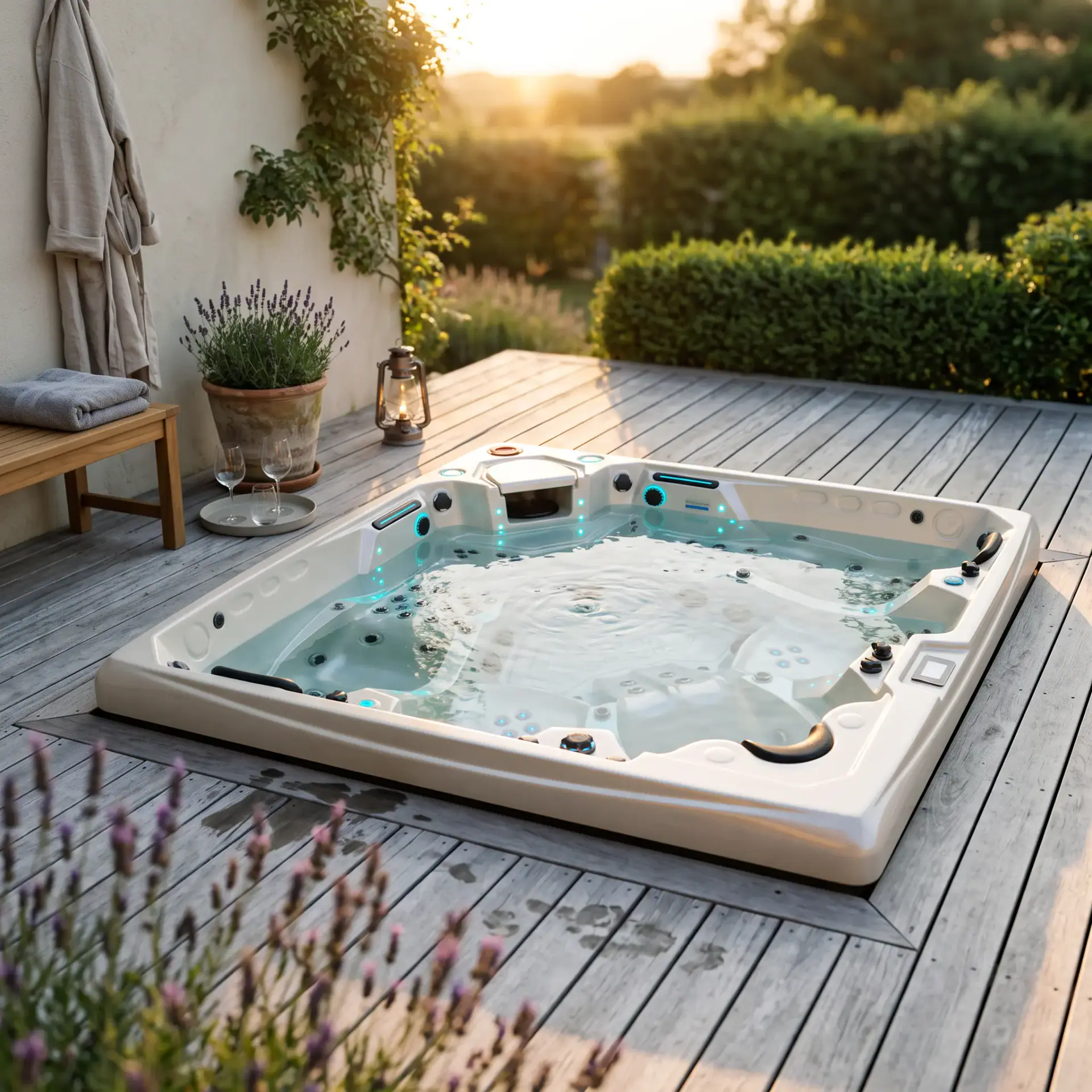
Which hot tub stands up best outdoors? Discover our expert comparison of acrylic spas, swim spas and built-in models. Insulation, durability and advice from SpaPRO.
In this article
Installing an outdoor spa enhances your property while creating an exceptional place to unwind. However, the outdoor environment is demanding: temperature changes, UV rays, airborne pollution and plant debris put materials under pressure. For property and hospitality professionals, or discerning private owners, choosing a hot tub should go beyond appearance.
At SpaPRO, we analyse the technical criteria that protect your investment over time. Here are the types of hot tubs recommended for a successful outdoor installation.
1. The rigid acrylic spa: lasting performance
A rigid spa with an acrylic shell is unquestionably the model best suited to prolonged outdoor exposure. Unlike entry-level models, it is built on sophisticated engineering.
Structural and UV resistance
The acrylic shell, often made by Aristech® or Lucite®, is treated to resist yellowing and microcracks caused by ultraviolet light. Beneath it, fibreglass or polyurethane reinforcement provides the rigidity needed to support several tonnes of water without deformation.
The critical importance of insulation
Outdoors, most heat is lost through the walls and water surface. The models recommended by SpaPRO feature multilayer perimeter insulation. This technology captures heat released by the pumps to preheat the air injected into the jets, substantially reducing demand on the electric heater.
2. The swim spa: a premium hybrid for the garden
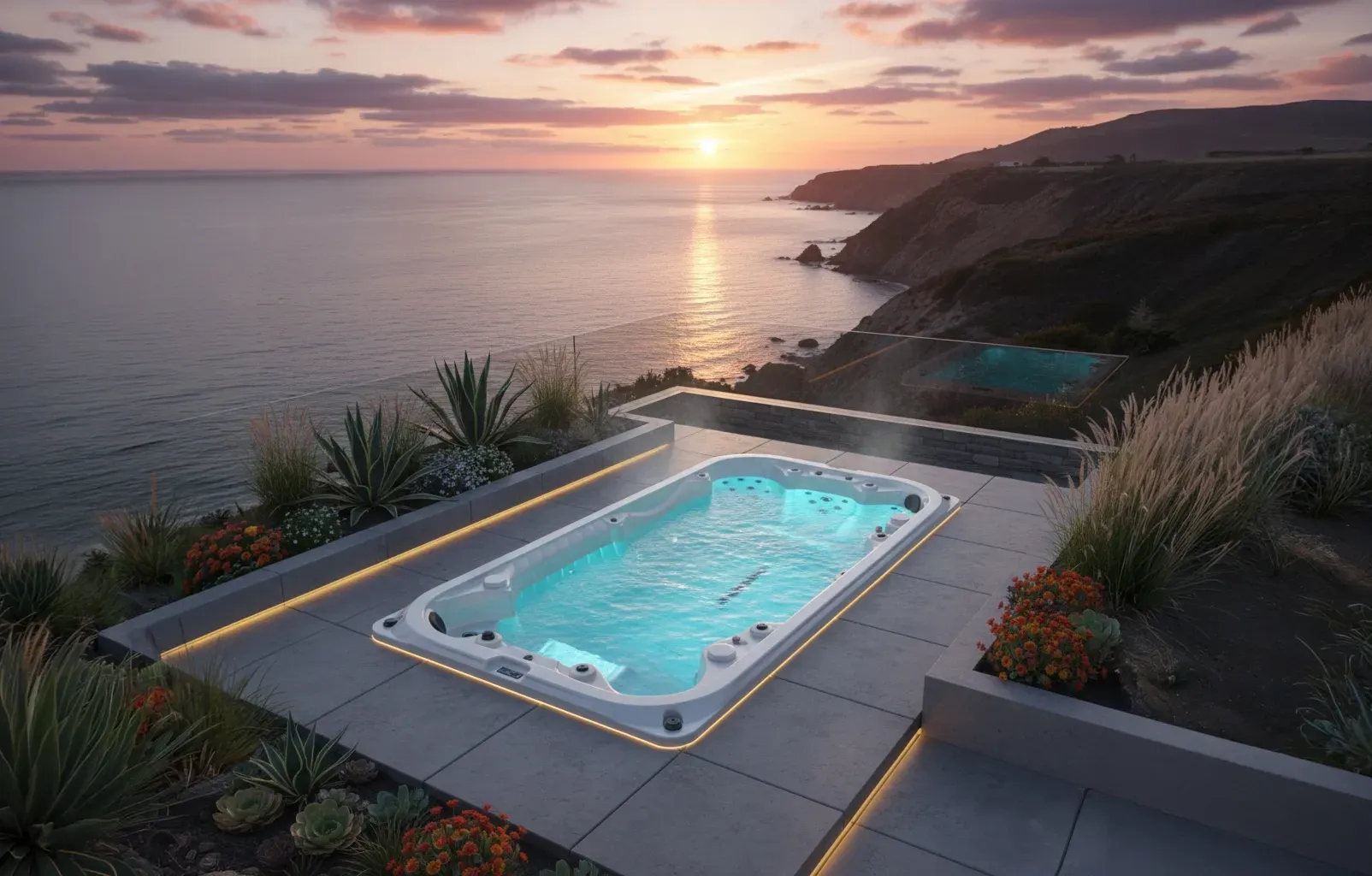
If you have more space, a swim spa represents the top end of outdoor equipment. It divides the pool into two zones or provides a single counter-current swimming lane.
- An alternative to a swimming pool: with fewer administrative constraints than an in-ground pool, it offers year-round use thanks to advanced thermal insulation.
- Exercise and relaxation: move from an intensive cardio session to a hydrotherapy massage in seconds. It is a preferred choice for premium residences and luxury holiday accommodation.
3. The built-in spa: architectural integration
For complete visual harmony, landscapers recommend a built-in or partially recessed spa. It integrates directly into a timber deck, such as ipe, or a natural-stone surround.
- Safety and accessibility: positioned at ground level, access to the pool is safer.
- Maintenance: take care: this type of installation requires an access hatch or service corridor so technicians can reach the internal components. At SpaPRO, we work with your contractors to plan these essential technical details.
Technical criteria for choosing outdoor equipment
To avoid regretting your purchase after the first winter, always check these three points:
- The frame: choose stainless steel or high-density composite. Wood may look attractive, but outdoors it requires demanding annual upkeep.
- The thermal cover: it should be rigid, thick and fitted with a central seal to prevent thermal bridging. A quality cover halves your electricity bill.
- The filtration system: outdoors, there are more impurities, including dust and pollen. A high-performance cartridge system combined with an ozonator is essential to reduce chemical use.
FAQ: everything you need to know about outdoor hot tubs
Can an outdoor hot tub keep running in winter?
Absolutely. Commercial-quality rigid spas are designed to operate 365 days a year. They include an automatic frost-protection mode that activates the pumps if the water temperature drops below a certain threshold.
How long does an outdoor spa last?
A well-maintained rigid acrylic spa has an average lifespan of 15–20 years. By contrast, an inflatable spa rarely lasts more than 3 seasons because UV exposure makes the materials porous.
How much does electricity cost?
For a well-insulated SpaPRO model, allow an annual average of around €1–1.50 per day. That cost can double for a poorly insulated model or one without a suitable thermal cover.
Do you need planning permission for an outdoor spa?
In France, generally not. A spa placed on the ground does not require authorisation. However, a swim spa or a structure larger than 10 m² may require a prior declaration of works to the local town hall.