Overflow vs skimmer spas: discover the advantages, drawbacks, costs and expert advice to choose the right spa system for your needs and budget.
In this article
Are you deciding between an overflow spa and a skimmer spa ? This question often comes up when purchasing a spa, because the two systems have very different characteristics. An overflow spa suggests luxury and performance, while a skimmer spa appeals through practicality and accessibility. Let us explore each technology to help you make the choice best suited to your needs.
The overflow spa: technical and aesthetic excellence
How does an overflow spa work?
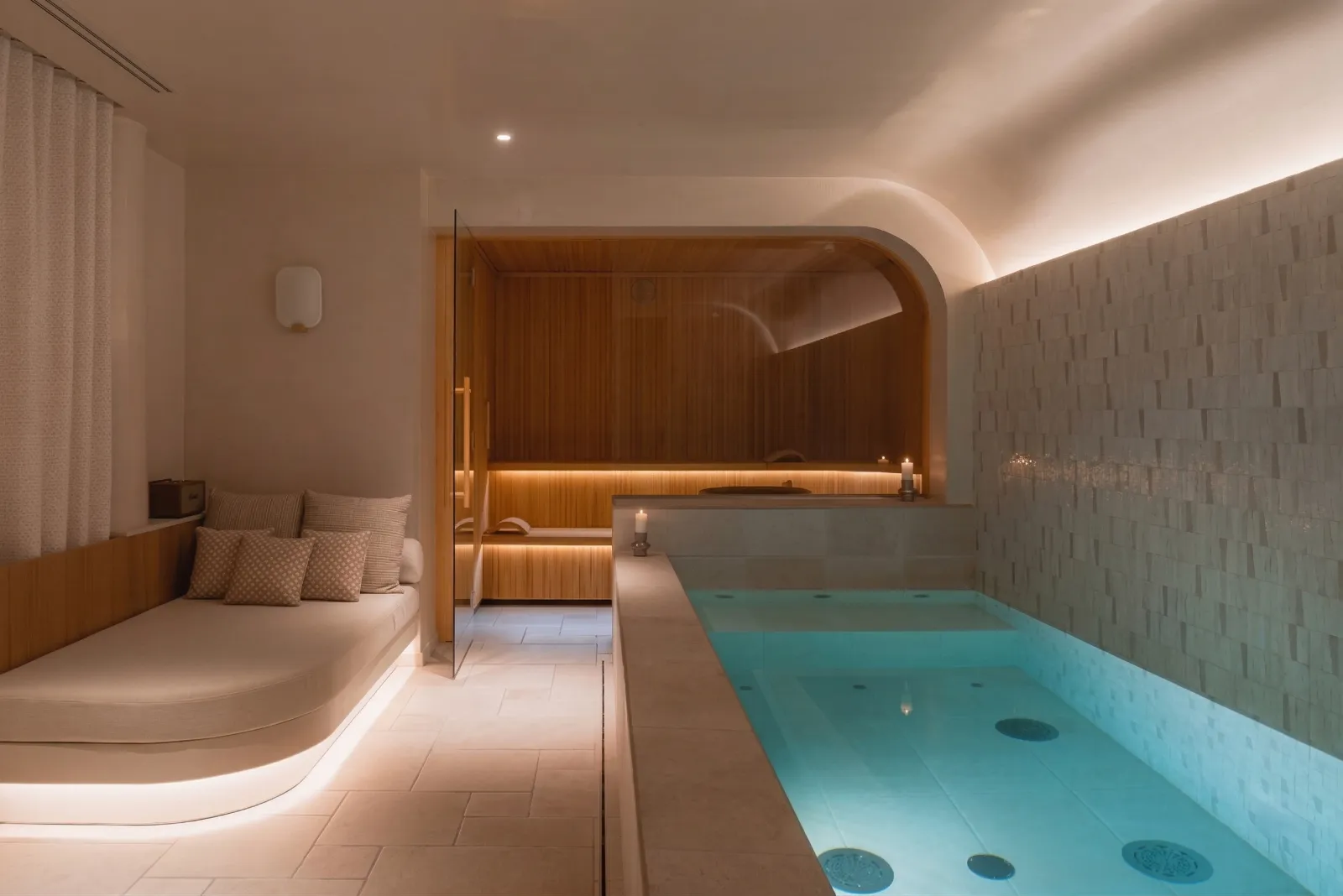
An overflow spa stands out through its distinctive water-circulation system. The water sits perfectly level with the edge of the pool, creating its characteristic mirror effect. It flows continuously into a perimeter channel, then into a balance tank, where it is filtered and heated before returning to the spa.
The clear advantages of an overflow system
An incomparable luxury aesthetic
The mirror effect of the flush waterline creates an exceptional visual finish. This clean, modern design turns your relaxation space into a luxurious setting.
Optimal hygiene and filtration
A continuous overflow spa provides particularly effective surface skimming. Impurities are removed immediately, ensuring impeccable water quality. The absence of a visible waterline also makes the shell easier to clean.
A constant water level
The water level stays the same regardless of the number of users. This makes it ideal for intensive shared use, particularly in commercial venues.
An immersive bathing experience
Bathing feels more enjoyable, with the body fully immersed in the water.
Constraints to consider
An overflow spa nevertheless has some drawbacks. Purchase costs are higher, averaging €15,000–30,000, because installation requires masonry work. Maintenance is also more technical due to the balance-tank system, and additional plant-room space is needed.
The skimmer spa: a proven, accessible solution
How a skimmer system works
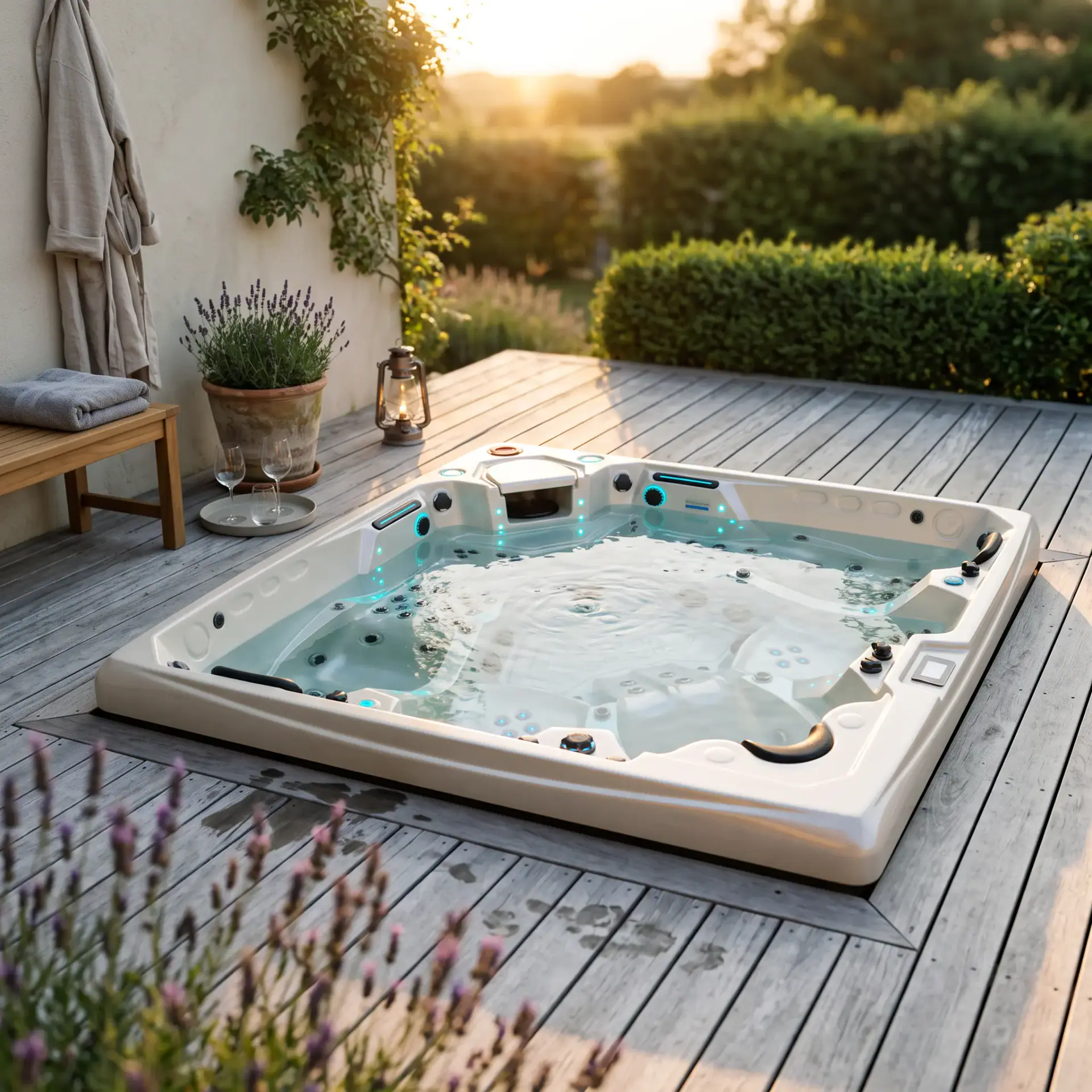
A skimmer spa uses a more traditional approach. The water level sits around ten centimetres below the edges. Water is drawn through rectangular openings called skimmers, which trap impurities in a filter basket. It is then filtered and heated before returning to the pool.
The strengths of a skimmer spa
Controlled costs
It is unquestionably the most economical solution to purchase and install. This affordability makes it a preferred choice for private owners.
Quick, straightforward installation
Less building work is needed than for an overflow spa. Installation can often be completed faster and with fewer technical constraints.
Easier maintenance
The filtration system is simpler to understand and maintain. Maintenance can generally be carried out by the user.
A wide choice of models
The market offers a wide variety of portable and built-in skimmer models, catering to all budgets and layouts.
The limitations of a skimmer system
Filtration is less effective than in an overflow spa, which can lead to a dirty waterline. The visible waterline creates a less seamless appearance, and the water level changes with the number of occupants.
Overflow spa vs skimmer spa
A complete comparison to help you choose
- Appearance: overflow: luxurious, with a striking mirror effect; skimmers: conventional, with a visible waterline
- Hygiene: overflow: excellent, with continuous surface skimming; skimmers: good, but regular cleaning is needed
- Filtration: overflow: highly effective and uniform; skimmers: less effective, with possible stagnant areas
- Water level: overflow: constant regardless of user numbers; skimmers: varies with occupancy
- Maintenance: overflow: more complex and technical; skimmers: simple and quick
- Purchase cost: overflow: high (€15,000–30,000); skimmers: affordable (€5,000–15,000)
- Installation: overflow: complex, requiring a balance tank; skimmers: simple and quick
- Space required: overflow: additional plant room needed; skimmers: compact, with no separate plant space
- Recommended use: overflow: commercial, intensive use and luxury residential; skimmers: private owners and family use
- Bathing experience: overflow: full immersion and a premium feel; skimmers: comfortable and proven
Our recommendation for your situation
Choose an overflow spa if:
- You are a professional operator, such as a hotel or wellness centre
- Appearance and prestige are priorities
- Your budget allows for the investment
- You want optimal hygiene
- Use will be intensive and shared
Choose a skimmer spa if:
- You are a private owner with a controlled budget
- Ease of maintenance is a priority
- Installation needs to be quick and straightforward
- Use will mainly be by the family
- You want excellent value for money
The choice between these systems ultimately depends on your priorities: luxury and maximum performance for overflow, practicality and accessibility for skimmers. Both offer the benefits of hydrotherapy; only the means and expectations differ.
FAQ: overflow and skimmer spas
What is the annual maintenance cost for each spa type?
A skimmer spa generally costs €300–500 per year to maintain, including chemicals, electricity and servicing. For an overflow spa, allow €500–800 annually due to the system's complexity and the balance tank's higher energy consumption.
Can a skimmer spa be converted into an overflow spa?
Technically possible, but very complex and expensive. All the plumbing must be rebuilt, a balance tank created and the structure modified. It is generally more economical to choose a new overflow spa directly.
What is the lifespan of each system?
Both systems have a similar lifespan of 15–20 years with regular maintenance. An overflow spa may require more frequent technical work on the balance tank, while skimmers are easier to replace if they fail.
Does an overflow spa use more energy?
Yes, because of the permanent circulation system and balance tank, which keep the water constantly moving. Additional consumption is around 15–25% compared with a skimmer spa of equivalent size.
Which system is best for intensive family use?
For a large family using the spa daily, an overflow spa provides better water quality through continuous filtration. However, a skimmer spa remains more than sufficient for normal family use and is more economical.
How do I know whether I have enough space for an overflow spa?
Allow a plant room of at least 2 m² for the balance tank, ideally close to the spa. It must be accessible, ventilated and protected from frost. At SpaPRO, we can assess feasibility during a technical site visit.
Are overflow spas noisier?
The permanent circulation system can produce slight background noise, mainly around the balance tank. Careful installation with insulating materials can reduce noise considerably.
Conclusion: make the choice that suits you
Choosing between an overflow spa and a skimmer spa is not just a technical question: it is primarily about personal priorities. If you want aesthetic excellence and impeccable hygiene for commercial use or a premium residential project, an overflow spa fully justifies its investment. For families wanting to enjoy hydrotherapy with a controlled budget and simpler maintenance, a skimmer spa is a sensible choice offering excellent value.
Whatever you choose, what matters most is being able to enjoy moments of relaxation and wellbeing in your future spa.